Kilimanjaro Climbing & Trekking Tours
Climb Mount Kilimanjaro with Natureloop
Stand on the Roof of Africa. Expert-led Kilimanjaro expeditions on every route, with safety-first crews, quality equipment and summit success rates above 90%.
Kilimanjaro Climbing & Trekking Tours
Stand on the Roof of Africa. Expert-led Kilimanjaro expeditions on every route, with safety-first crews, quality equipment and summit success rates above 90%.
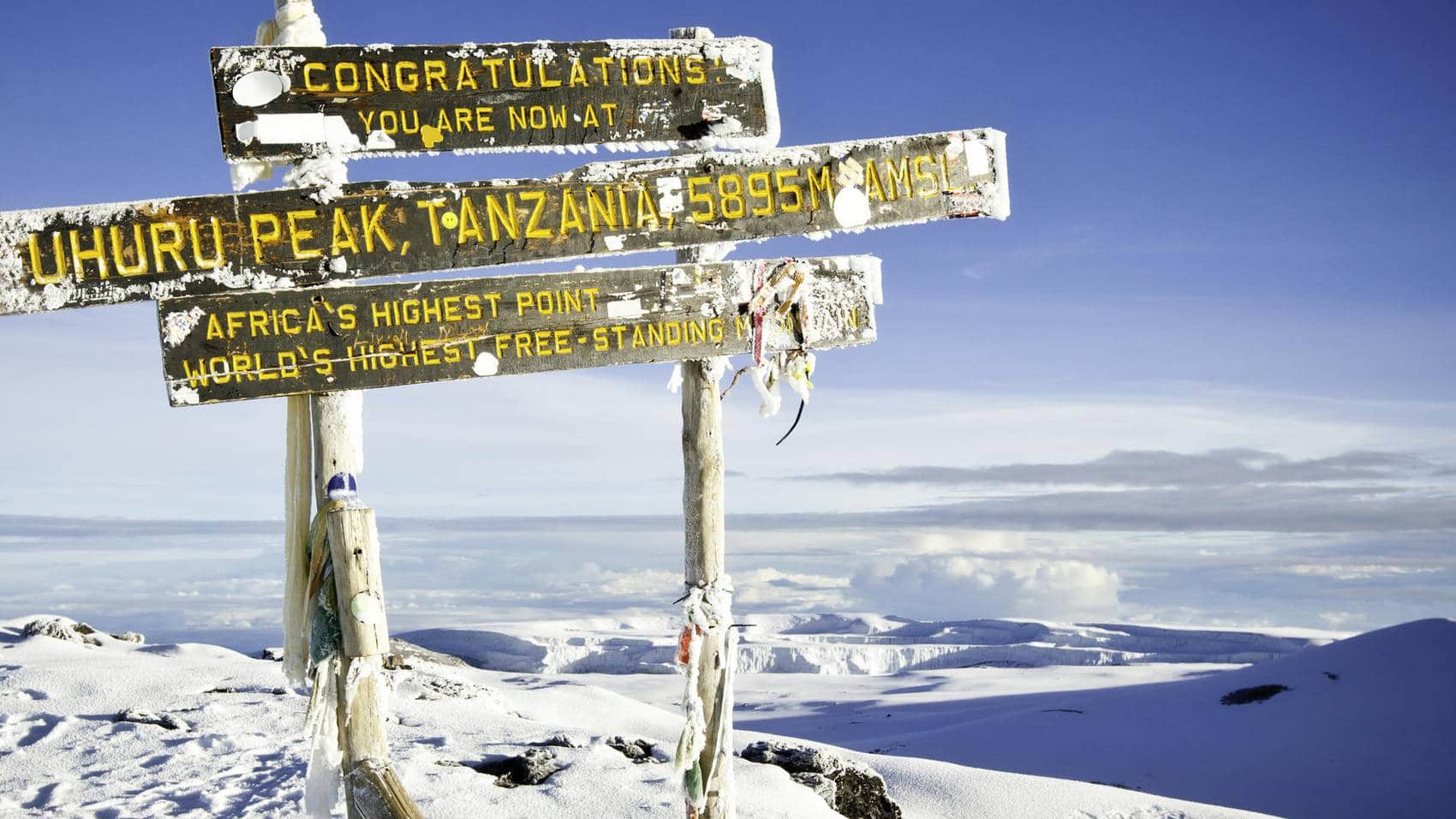
5,895m
Uhuru Peak, the summit
7
Established climbing routes
90%+
Our summit success rate
5
Climate zones crossed
The Mountain
Mount Kilimanjaro is the highest mountain in Africa and the tallest free-standing mountain on Earth. Rising 5,895 metres from the Tanzanian plains, its snow-capped summit — Uhuru Peak — is one of the world's great trekking prizes, and one that requires no technical climbing skills to reach.
Natureloop Safaris runs private and small-group Kilimanjaro climbs on all major routes. Our hand-picked mountain crews, rigorous safety protocols, quality camping equipment and generous acclimatization-focused itineraries have helped hundreds of climbers stand on the summit.
This page is your complete Kilimanjaro travel guide: how the mountain works, how to choose your route, when to climb, how to prepare, and what life on the mountain is really like.
Choose Your Path
Six established trails lead to Uhuru Peak. Each has its own character, scenery and acclimatisation profile — we'll help you pick the right one.
 Moderate
The most beautiful route on Kilimanjaro — remote start, superb acclimatization.
 Moderate
The historic "Coca-Cola Route" — the only trail with mountain hut accommodation.
 Moderate
The quiet northern approach — wild, dry and far from the crowds.
 Moderate to challenging
The classic "Whiskey Route" — scenic, varied and Kilimanjaro's most popular trail.
 Moderate
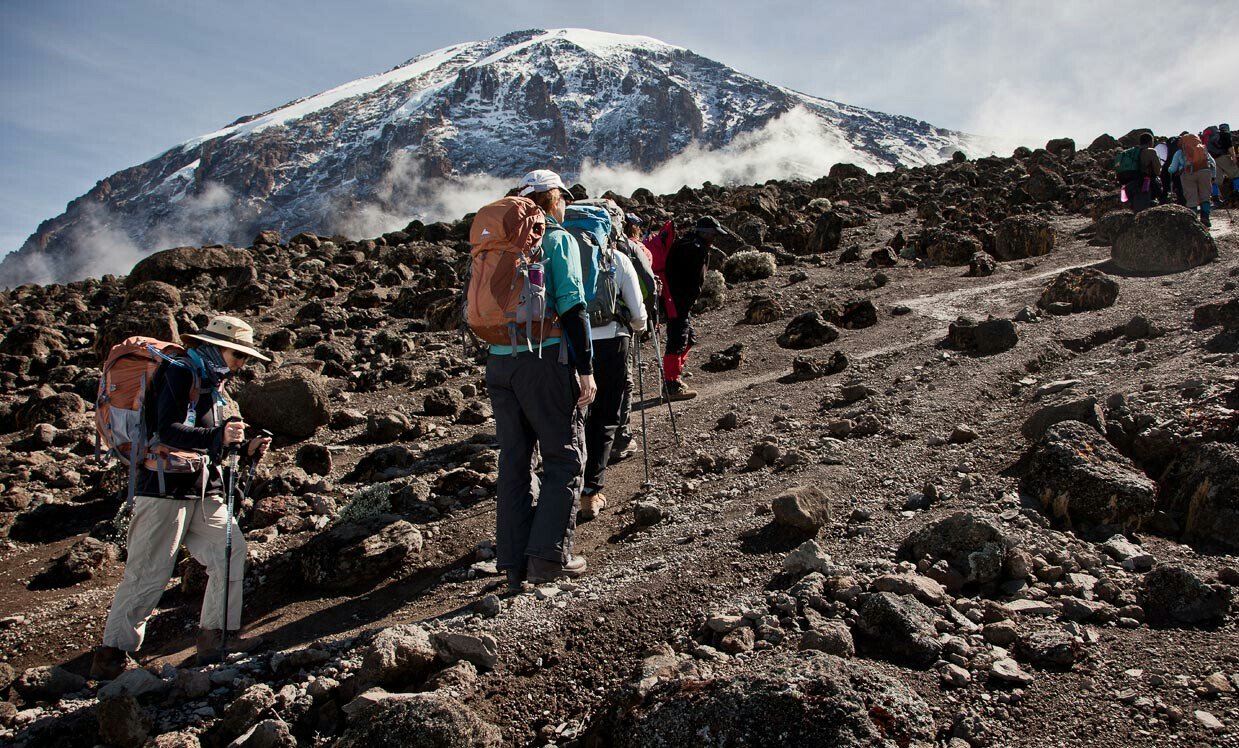
The grand traverse — nine days around the entire mountain for the highest success rate.
 Challenging
The steep, direct challenge — for experienced trekkers only.
01
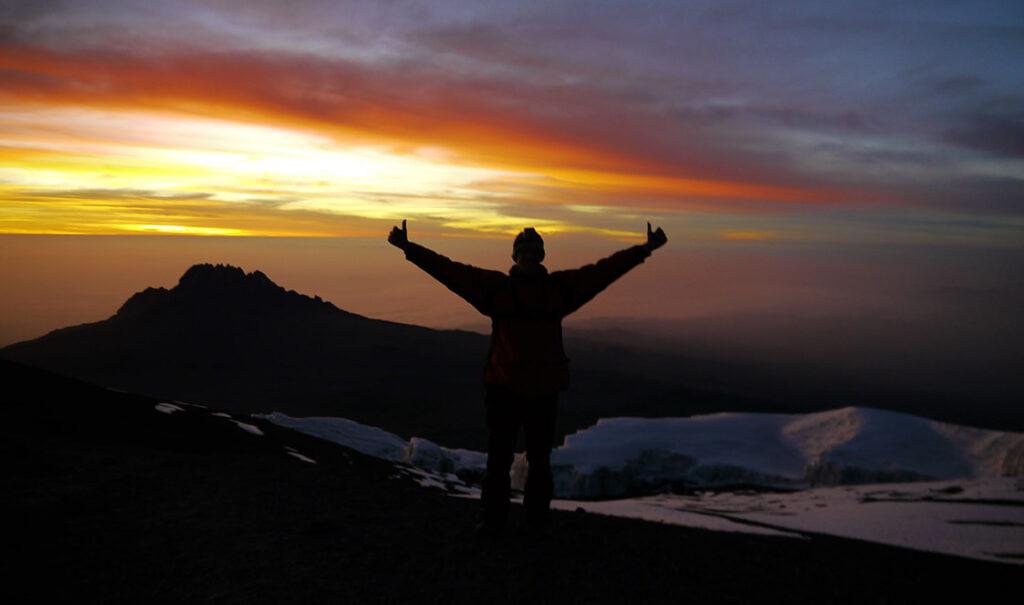
Kilimanjaro is one of the Seven Summits and the most achievable of them all. No ropes, no ice axes, no mountaineering experience — just determination, good preparation and a strong crew behind you.
In a single week you walk from equatorial rainforest through moorland and alpine desert to an arctic summit with glaciers and views that stretch to the curve of the Earth. Few journeys on the planet offer such variety, or such a profound sense of achievement.
02
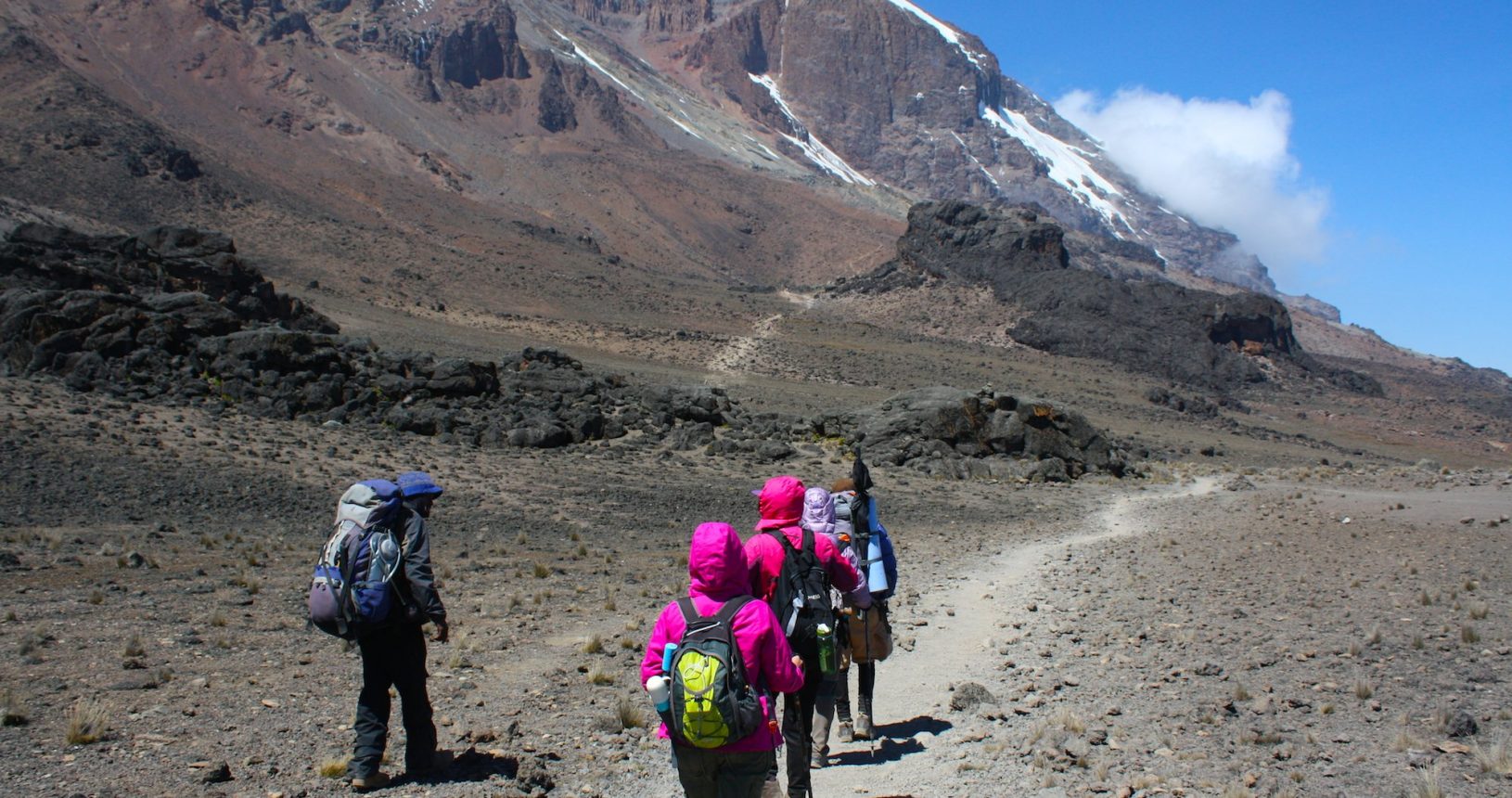
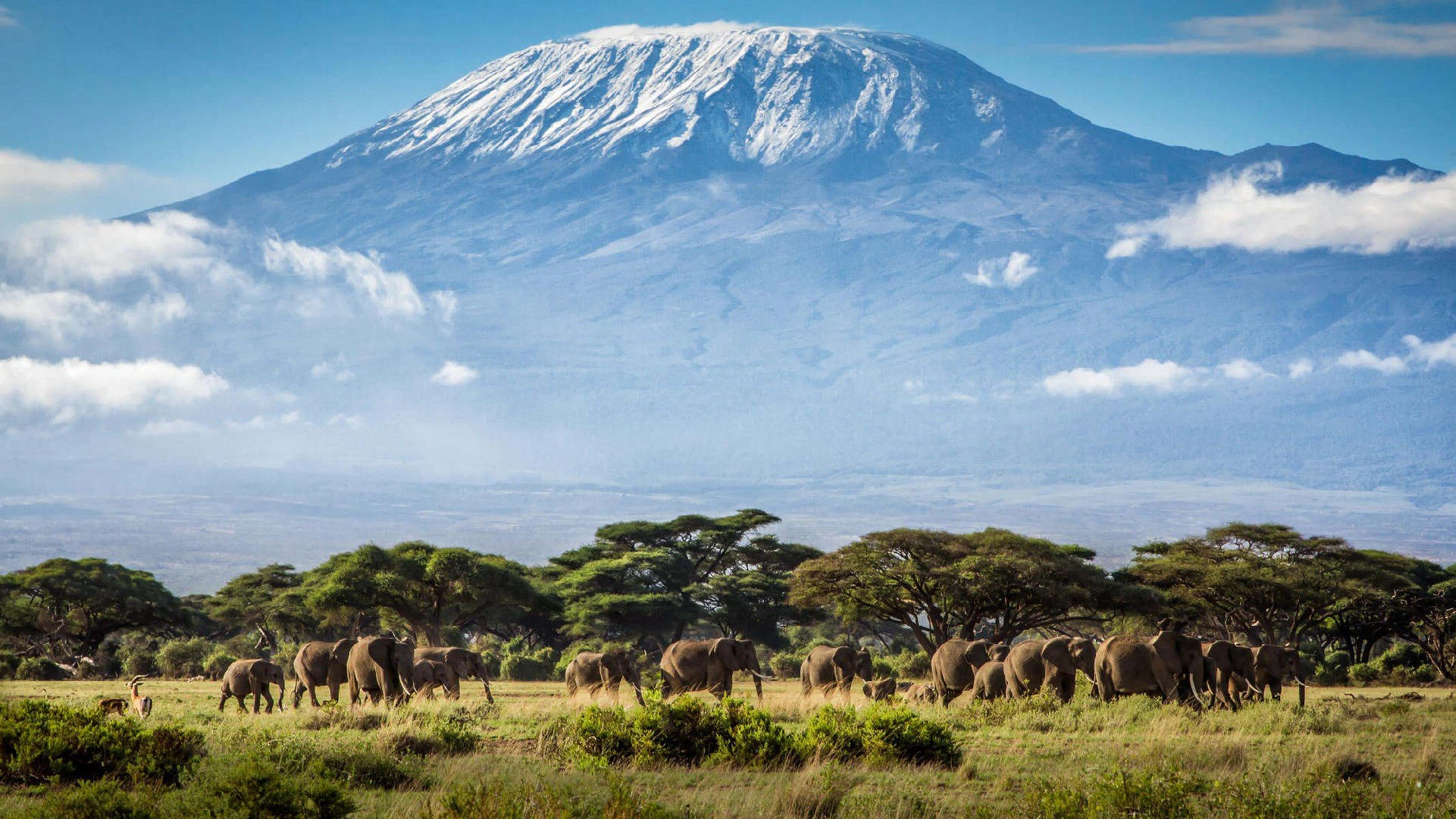
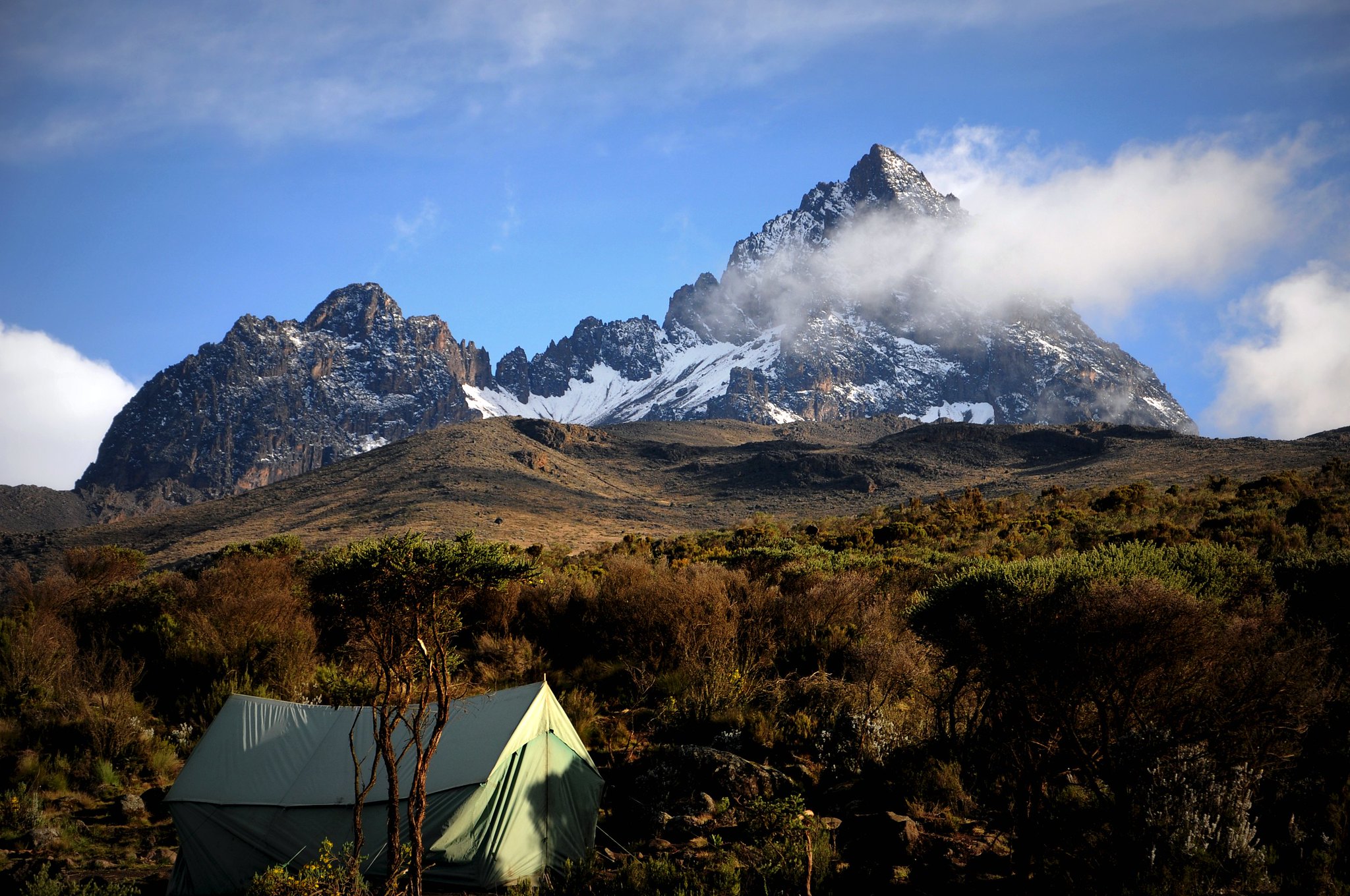
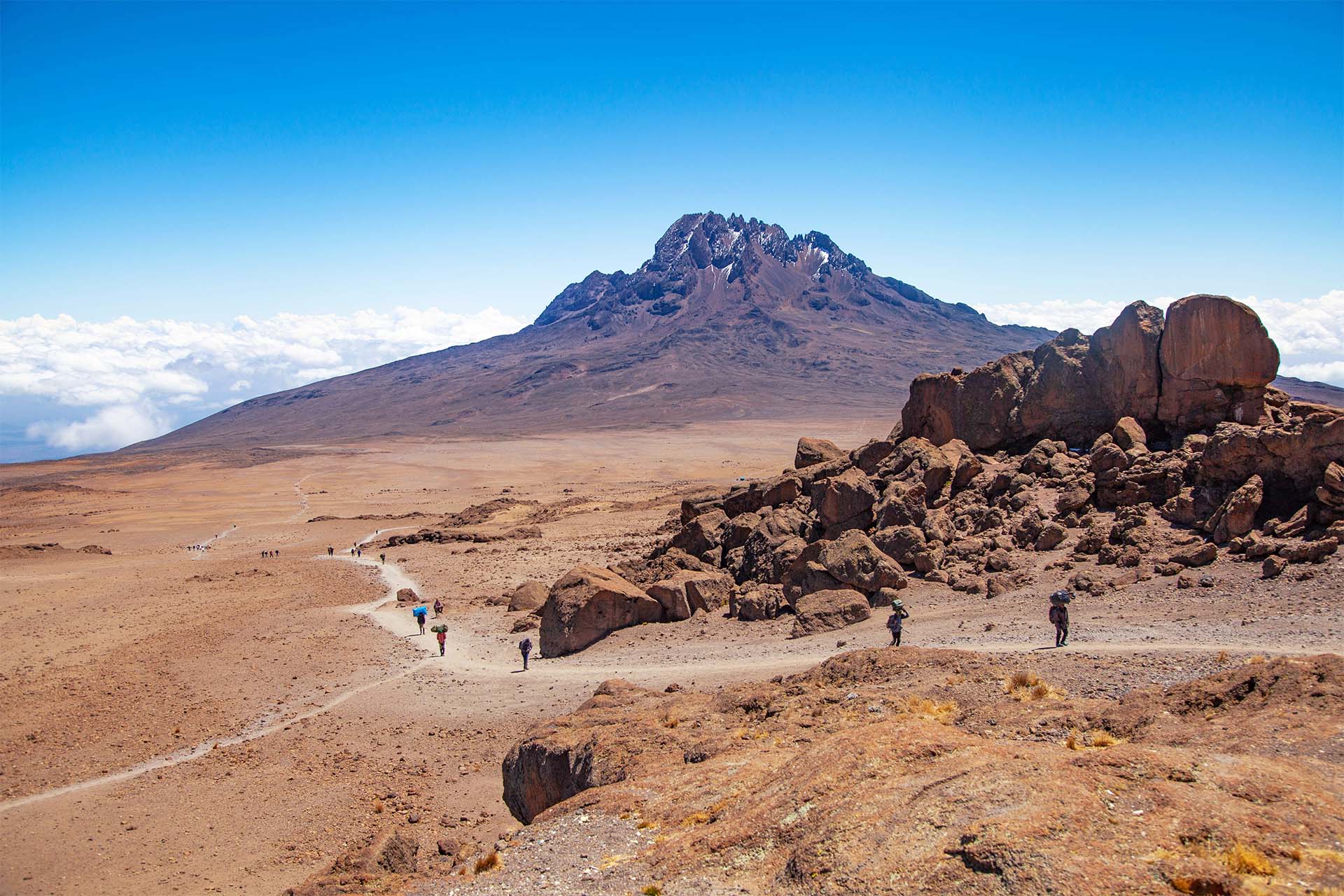
Kilimanjaro sits in northern Tanzania near the Kenyan border, inside Kilimanjaro National Park — a UNESCO World Heritage Site. It is a dormant volcano with three cones: Kibo (the summit cone), Mawenzi and Shira.
The mountain creates its own weather. You will cross five distinct climate zones, and temperatures swing from 30°C in the rainforest to -20°C on summit night.
03
There are seven established routes up Kilimanjaro, and the right choice depends on your experience, schedule, budget and appetite for crowds.
Our advice is simple: favour acclimatization over speed. Longer routes — Lemosho and the Northern Circuit above all — give you the highest chance of reaching the summit and enjoying the journey.
04
Kilimanjaro can be climbed year-round, but conditions vary greatly with the seasons.
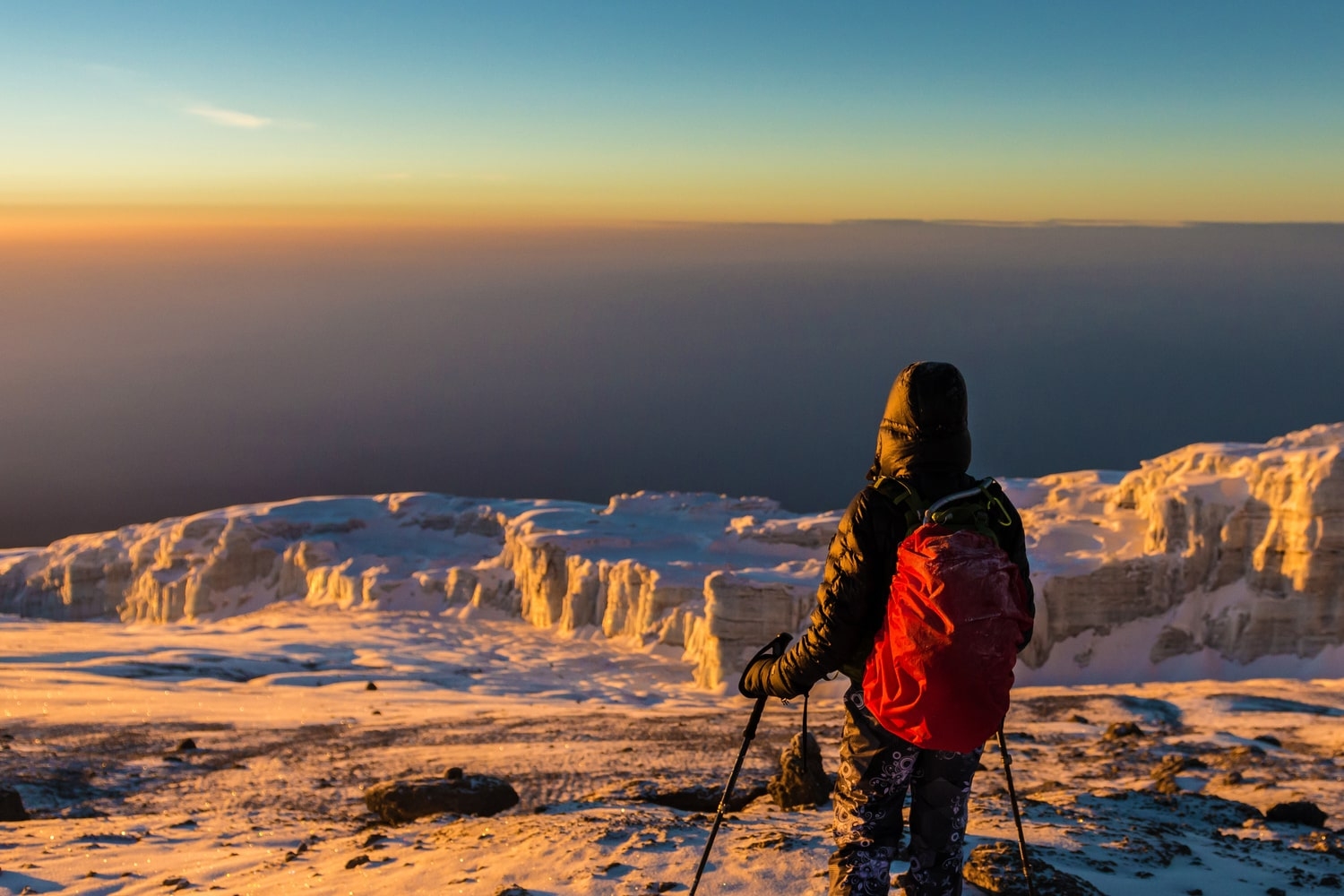
The two dry seasons — January to mid-March and June to October — offer the best weather and the clearest summit views. The long rains (late March to May) and short rains (November) bring cloud, mud and snow higher up, but also empty trails and dramatic skies.
05
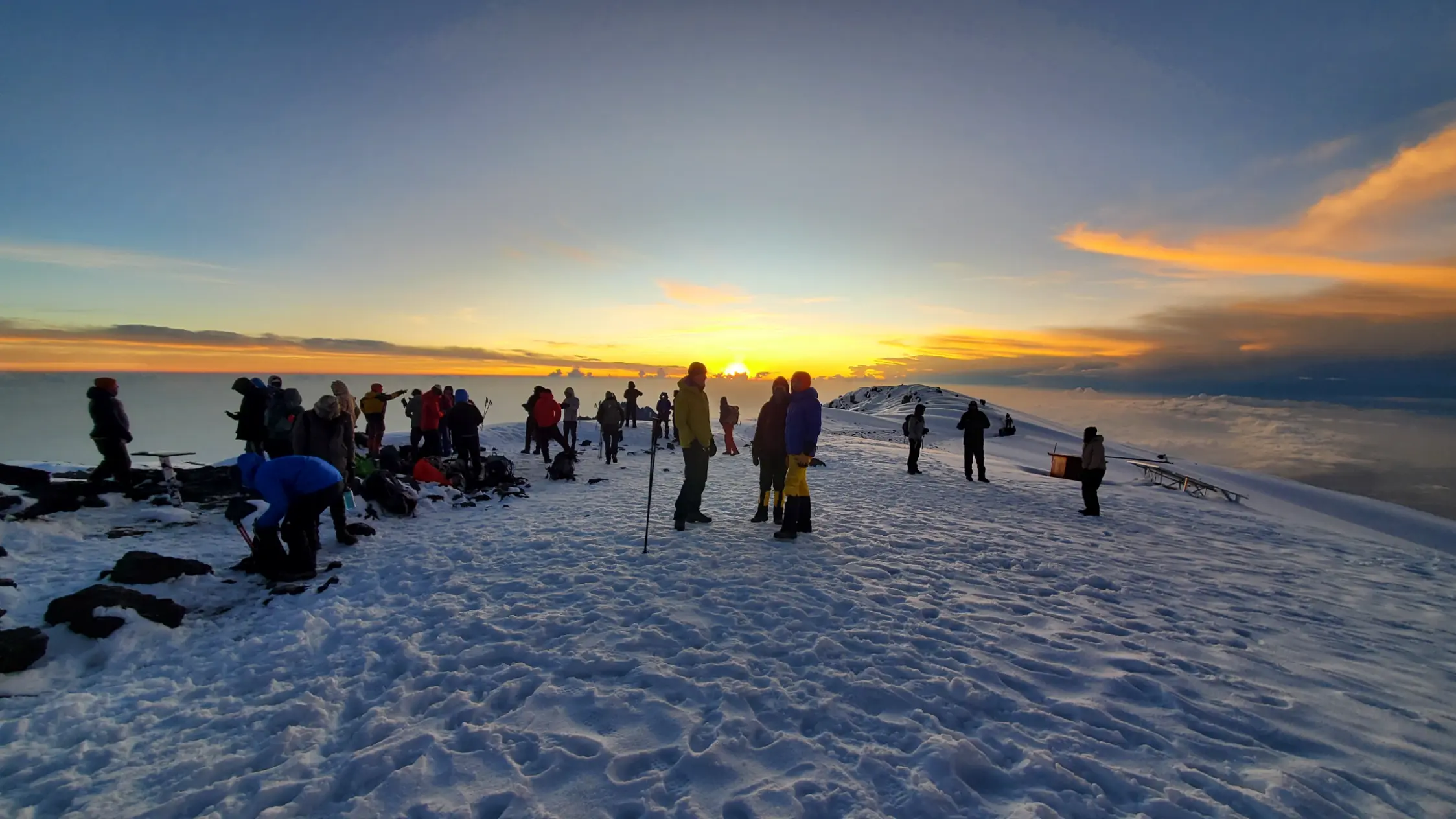
January–March is generally colder but clearer, with a chance of snow on the summit. June–October is the busiest and driest period. Whatever the month, expect four seasons in a single day — and pack for all of them.
06
Kilimanjaro is a trek, not a technical climb — but it is far from easy. The challenge is altitude, not terrain: at the summit there is roughly half the oxygen available at sea level.
Success comes down to three things: a well-paced itinerary, good hydration and nutrition, and listening to your guide. With those in place, most reasonably fit people can reach the top.
07
You do not need to be an athlete, but you should be able to walk uphill for 5–7 hours a day, several days in a row, carrying a light daypack.
We recommend starting training 8–12 weeks before your climb: long weekend hikes, stair climbing, cycling or running, and if possible some walks at altitude.
08
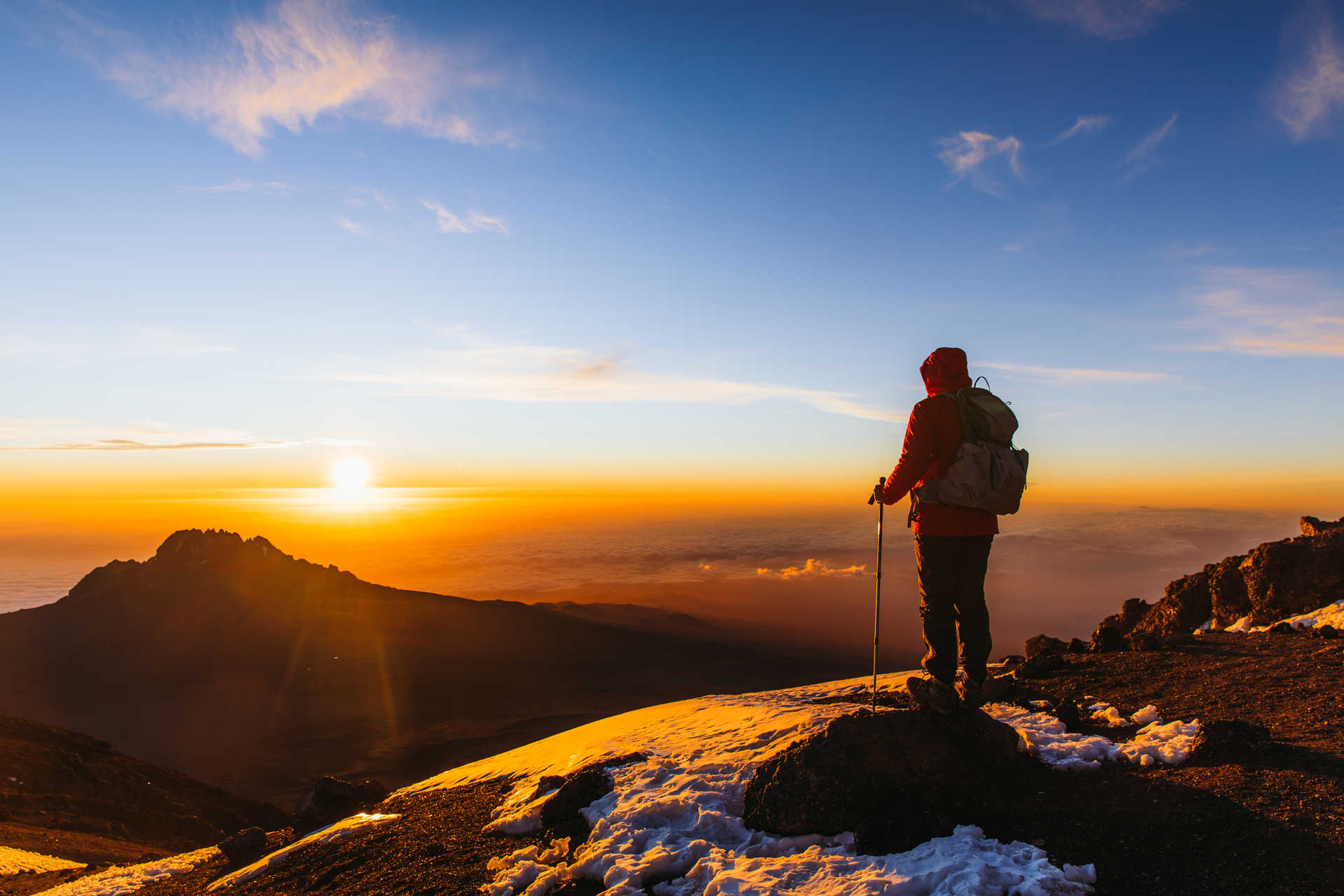
Acclimatization is the single biggest factor in summit success. It is why we build 'climb high, sleep low' days into our itineraries and recommend longer routes wherever possible.
Extra acclimatization days — at Horombo, Karanga or Moir Hut — give your body time to produce more red blood cells and adapt to thinner air.
09
Altitude sickness can affect anyone, regardless of age or fitness. Our guides are trained Wilderness First Responders who monitor your oxygen saturation and pulse every morning and evening.
We carry emergency oxygen and a portable stretcher on every climb, follow strict descent protocols if symptoms appear, and maintain radio contact with our base office throughout your trek.
10
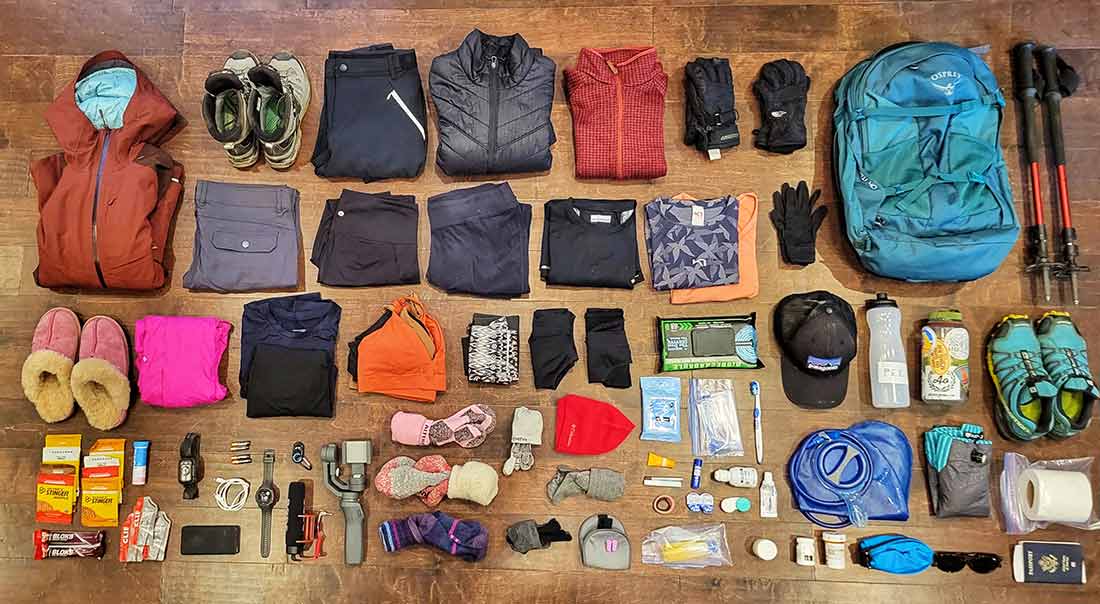
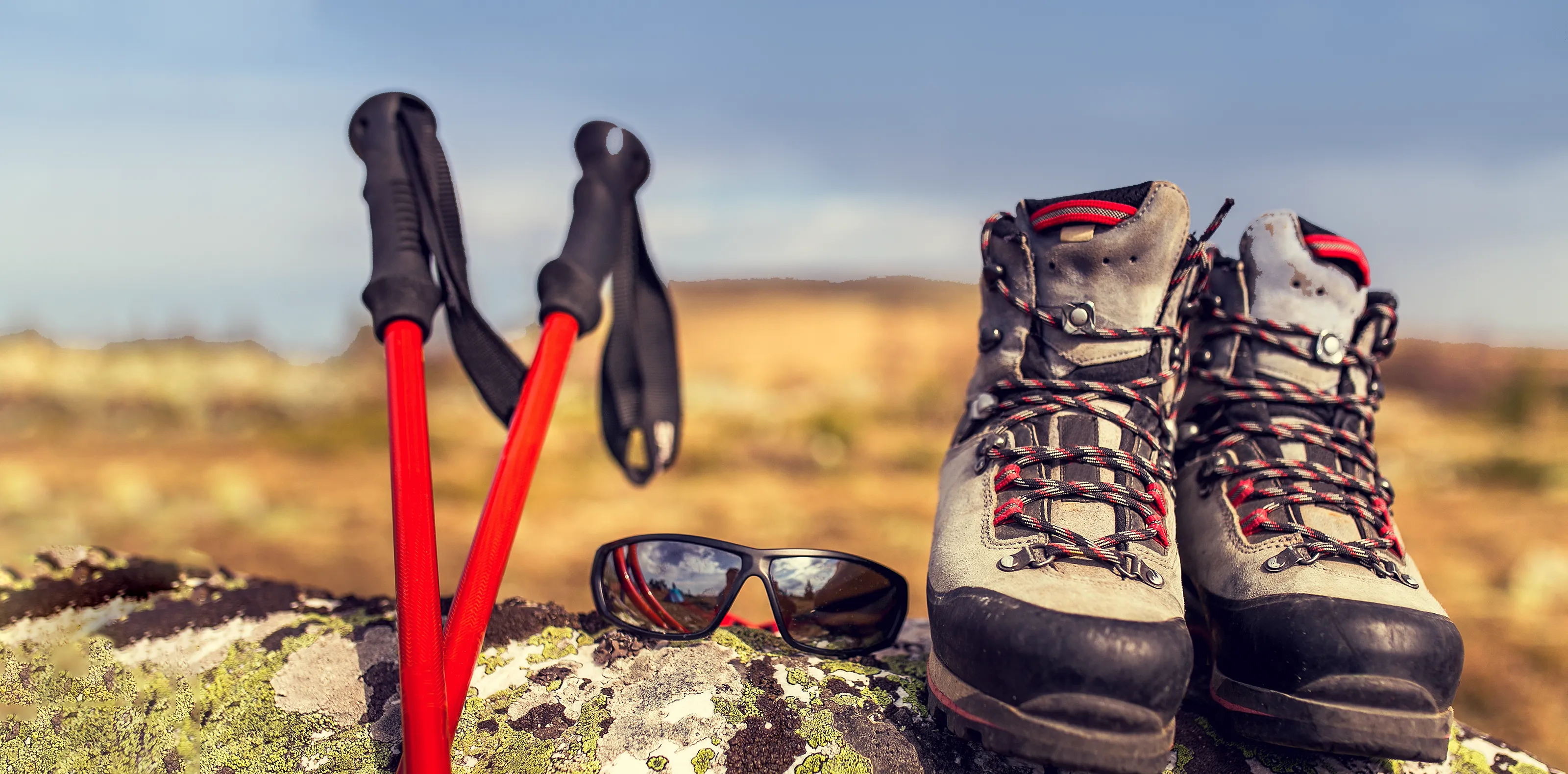
Packing right makes the difference between a comfortable climb and a miserable one. You will need layered clothing for -20°C to +30°C, quality broken-in boots, a four-season sleeping bag and a waterproof shell.
When you book we send you our complete, tested packing list — and we can hire sleeping bags, down jackets, poles and duffels in Arusha if you prefer not to travel with them.
11
We provide quality four-season mountain tents, a private mess tent with tables and chairs, sleeping mats, cooking equipment and all safety gear including emergency oxygen and a first-aid kit.
Your crew carries everything except your daypack, so you walk light and enjoy the mountain.
12
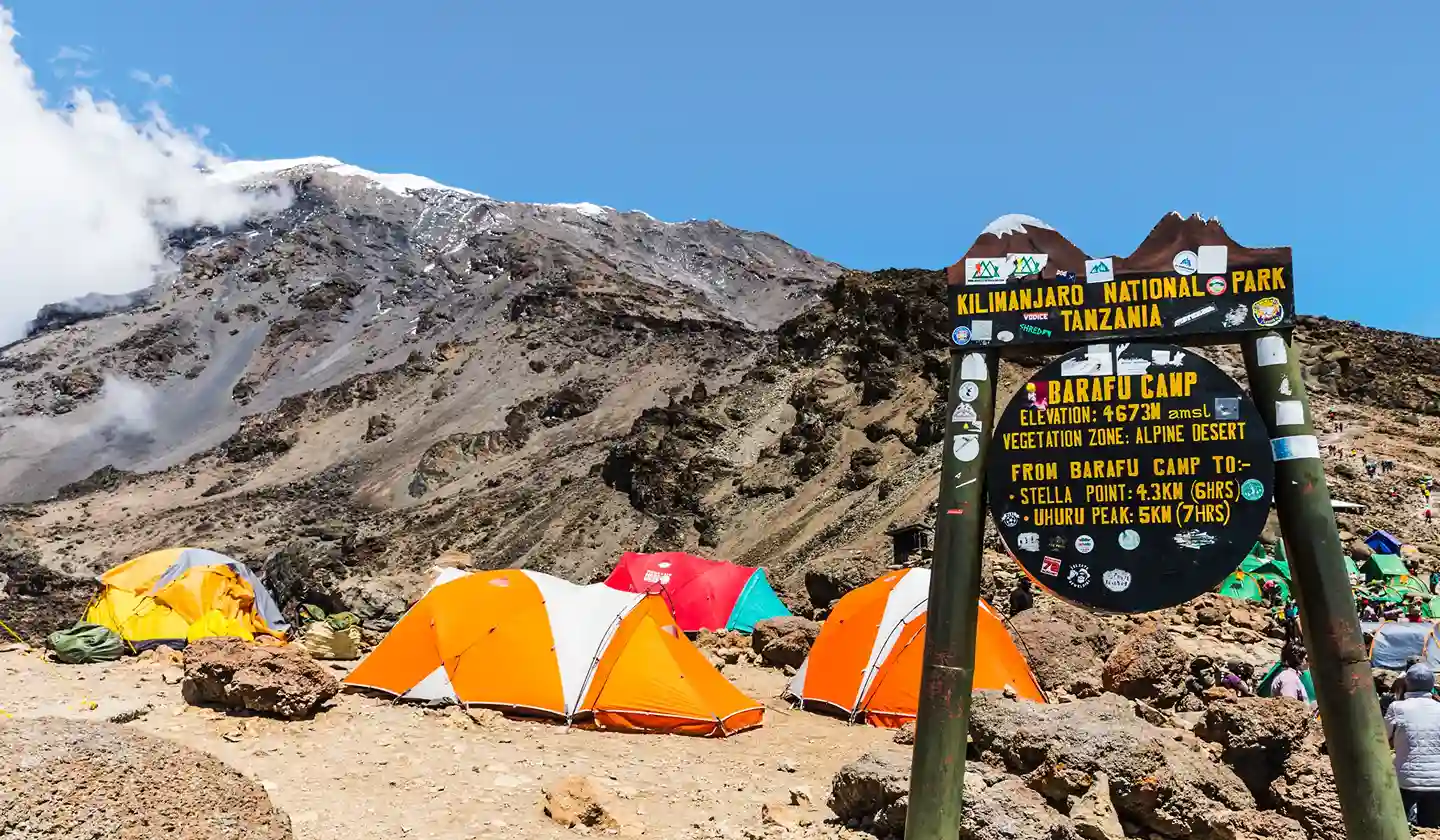
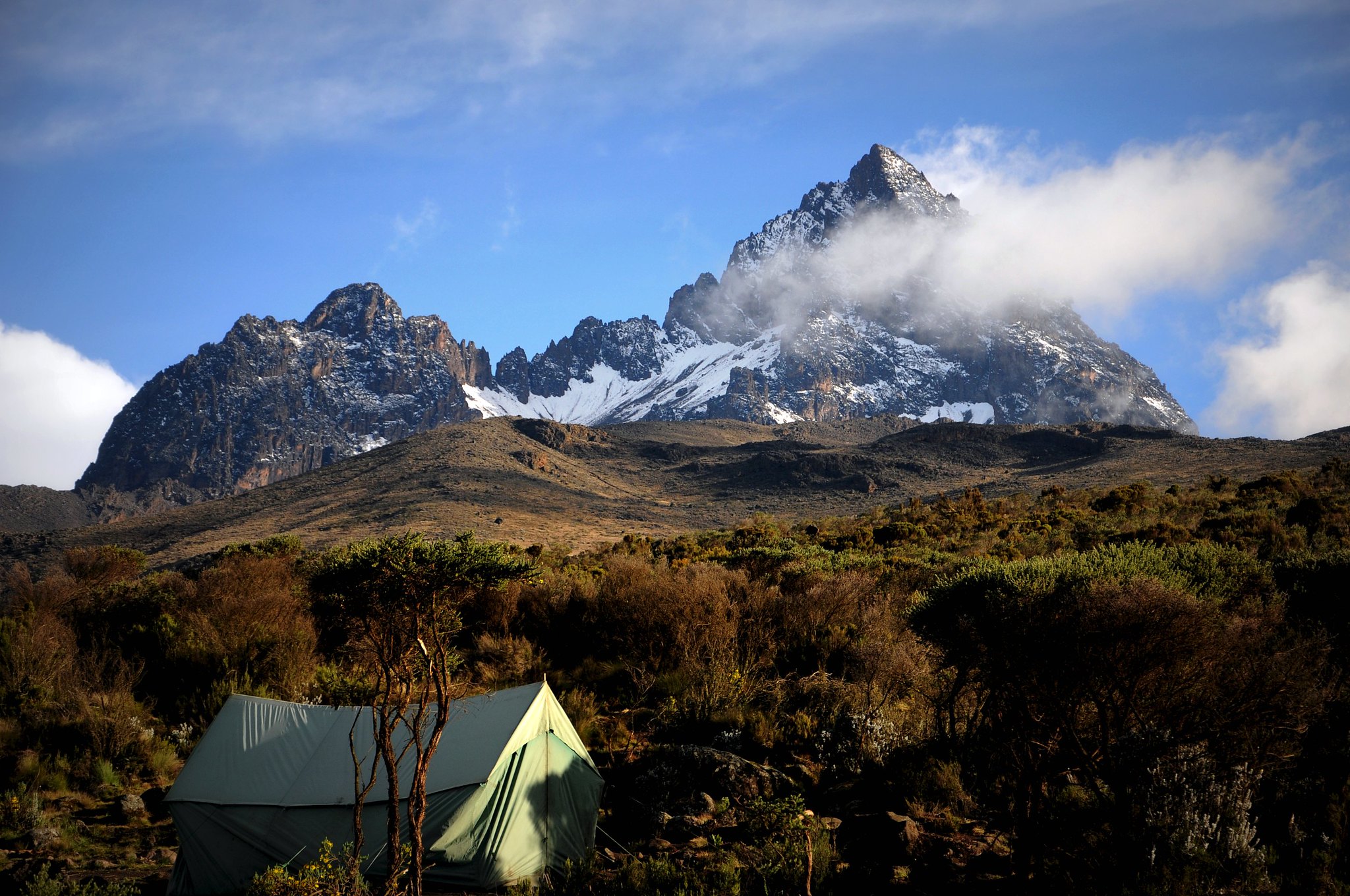
On all camping routes you sleep in roomy three-person dome tents (two climbers per tent) pitched by our crew before you arrive each afternoon. On the Marangu Route you sleep in dormitory-style mountain huts with bunk beds.
Either way, your evenings end with a hot meal in the mess tent or dining hut as the temperature drops and the stars come out.
13
Our mountain chefs prepare fresh, energy-rich meals three times a day — soups, pastas, rice dishes, fresh fruit and vegetables, and hot drinks on tap. Special diets (vegetarian, vegan, gluten-free) are catered for with advance notice.
All drinking water is collected from mountain streams and purified by our crew. You should plan to drink 3–4 litres a day to help with acclimatization.
14
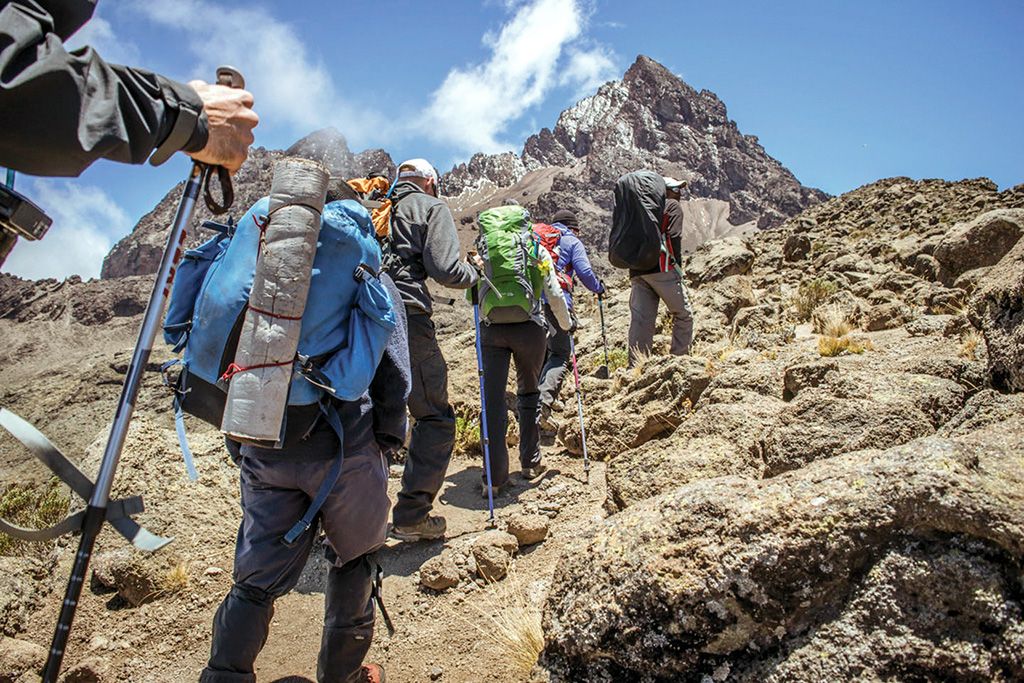
Your climb is led by a licensed, English-speaking head guide with years of summit experience, supported by assistant guides, a cook and a team of porters — typically 3–4 crew members per climber.
Our crew are the heart of every Natureloop climb: they set your pace, carry your gear, cook your meals and cheer you to the summit.
15
We are committed to fair, ethical climbing. Our porters are paid above-park-standard wages, carry no more than 20kg, receive proper food, shelter and equipment, and are insured while on the mountain.
We follow Leave No Trace principles on every trek and carry all waste off the mountain.
16
Tipping is customary and forms an important part of crew income. As a guideline, budget around US$250–350 per climber for a 7-day climb, pooled and distributed by the head guide at the farewell ceremony: roughly $20/day for the head guide, $15/day for assistant guides and the cook, and $8–10/day per porter.
17
Safety is the foundation of every climb we run: twice-daily health checks with pulse oximeters, emergency oxygen on every trek, guides certified in wilderness first aid, and clear evacuation protocols coordinated with the park rescue service.
Travel insurance covering trekking up to 6,000m, including emergency evacuation, is mandatory for all our climbers.
18
Standard travel policies rarely cover high-altitude trekking. You need a policy that explicitly covers hiking up to 6,000m and includes helicopter or stretcher evacuation and medical treatment.
We can recommend specialist providers and will check your policy details before the climb as part of our pre-departure briefing.
Guided Treks
Every package includes certified mountain guides, full camping or hut logistics, safety equipment and park fees — priced per person.
7 daysmachame route route
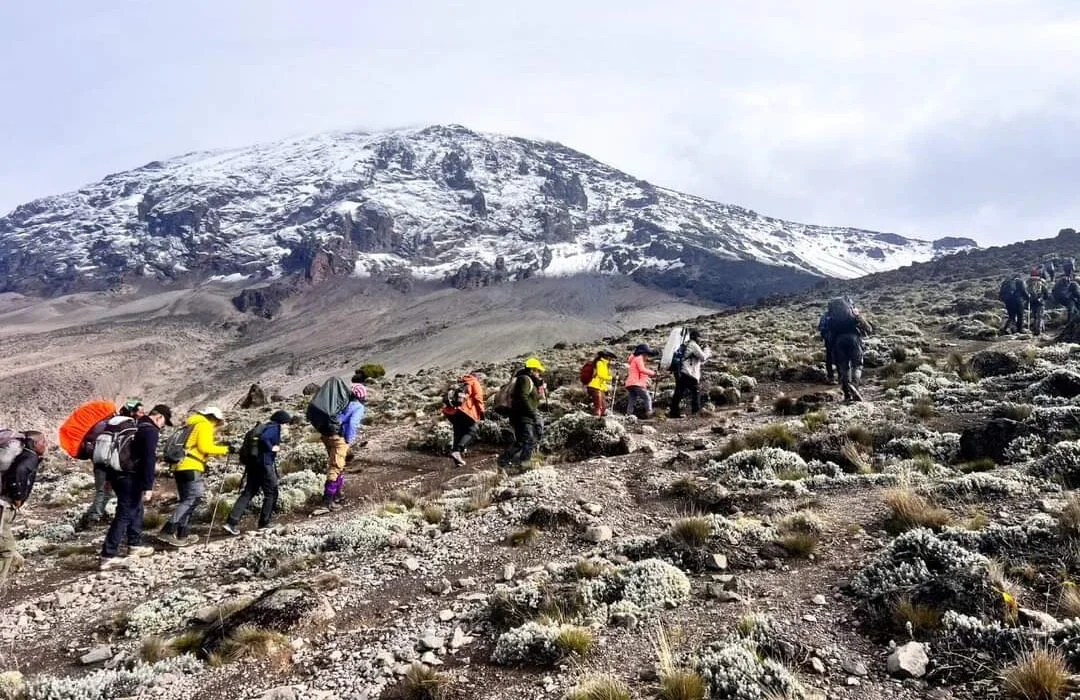 8 days
lemosho route route
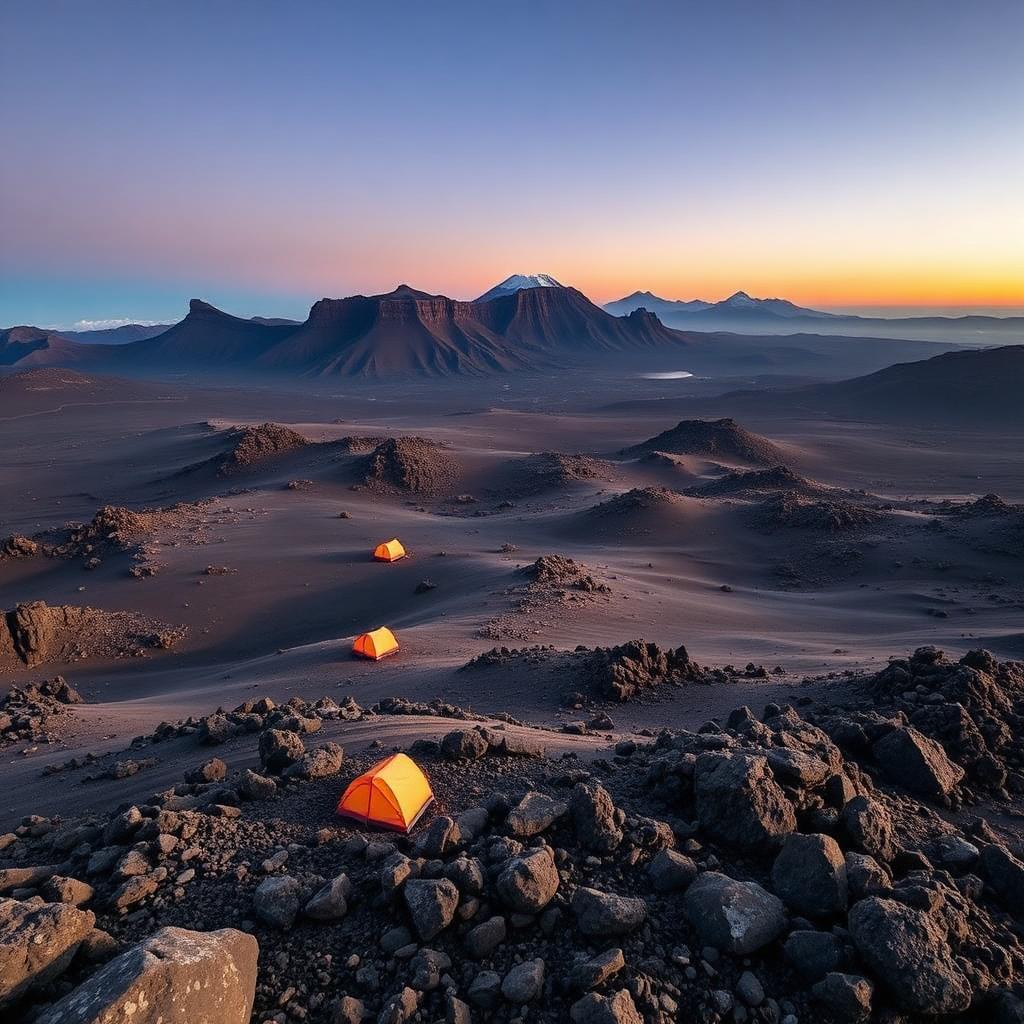 9 days
northern circuit route route
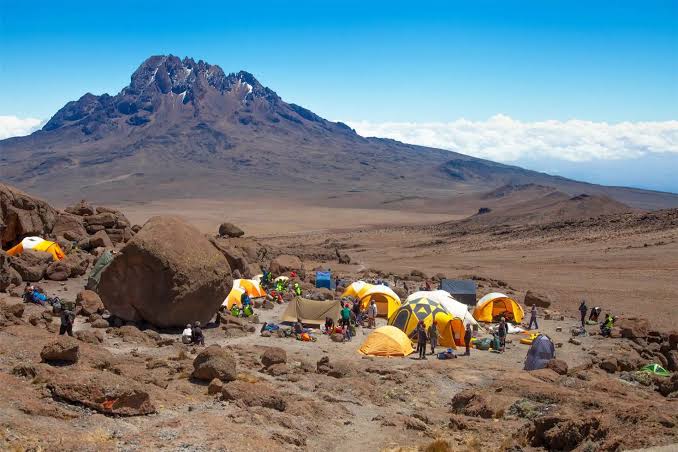 6 days
marangu route route
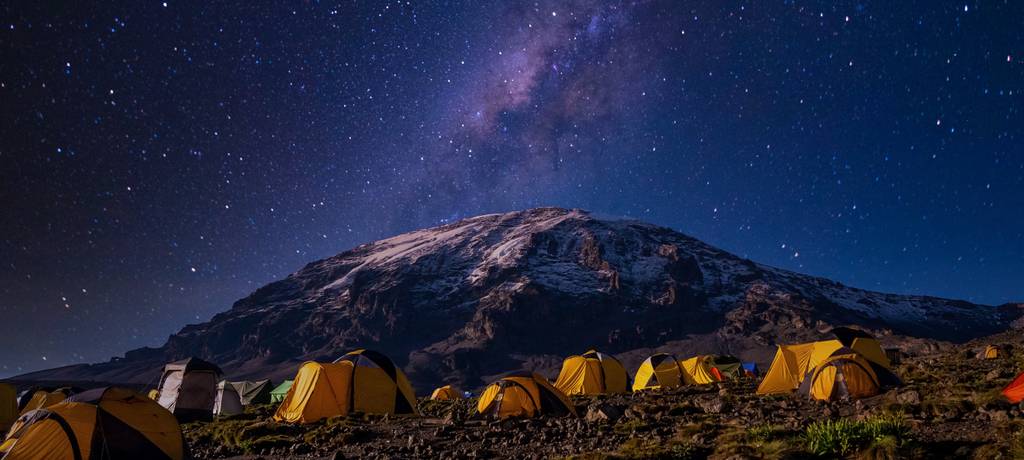 6 days
machame route route
7 dayslemosho route route
5 daysmarangu route route
7 daysrongai route route
Good to Know
No technical climbing experience is needed — Kilimanjaro is a trek. Good fitness, the right itinerary and a strong crew are what matter.
Ready for the Roof of Africa?
Tell us your dates, experience and preferred route — our mountain team will design your climb and send a detailed proposal within 24 hours.
Plan My Climb