All Experiences Safari Experience
Great Migration Safaris
Follow two million wildebeest across the Serengeti
Follow two million wildebeest across the Serengeti
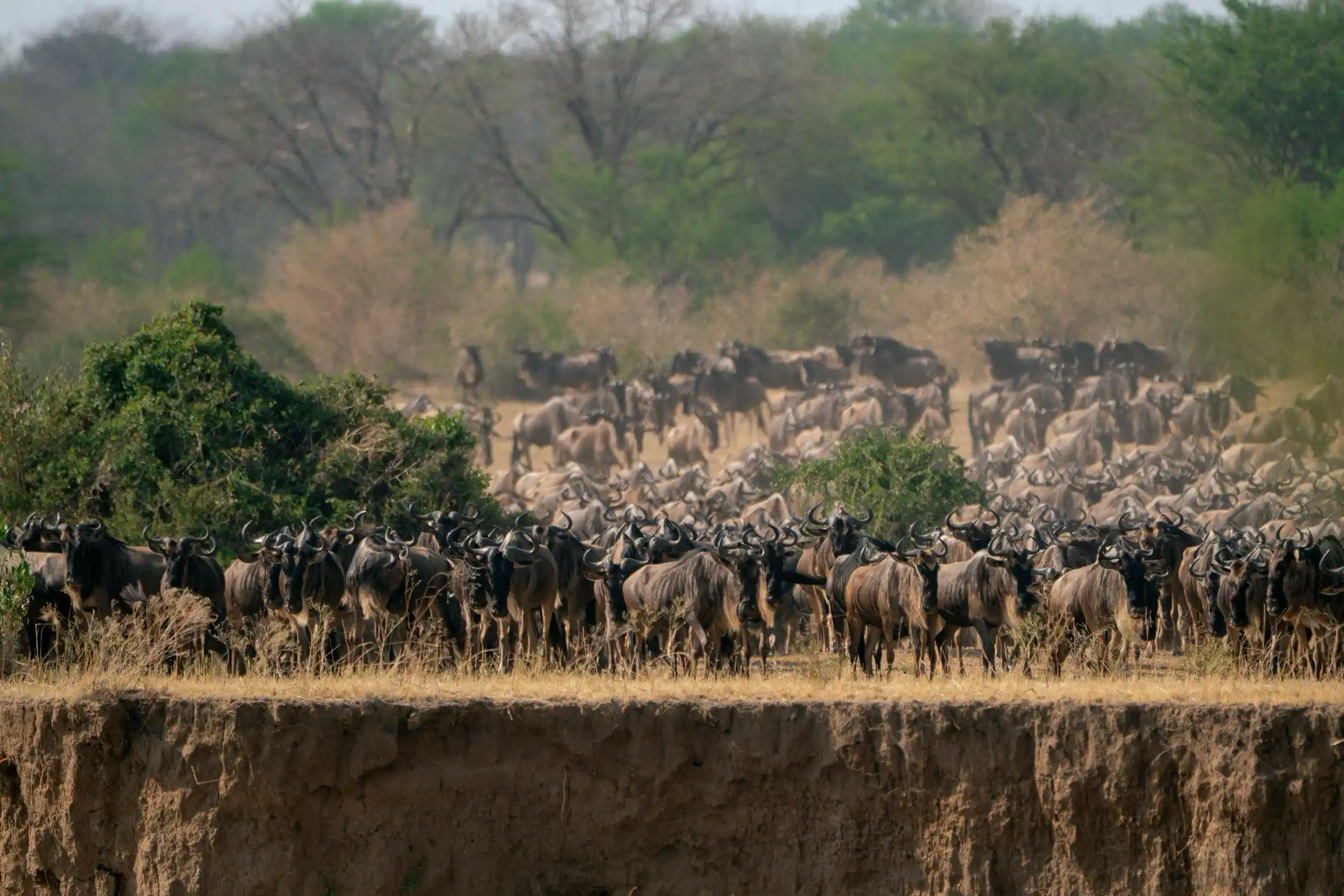
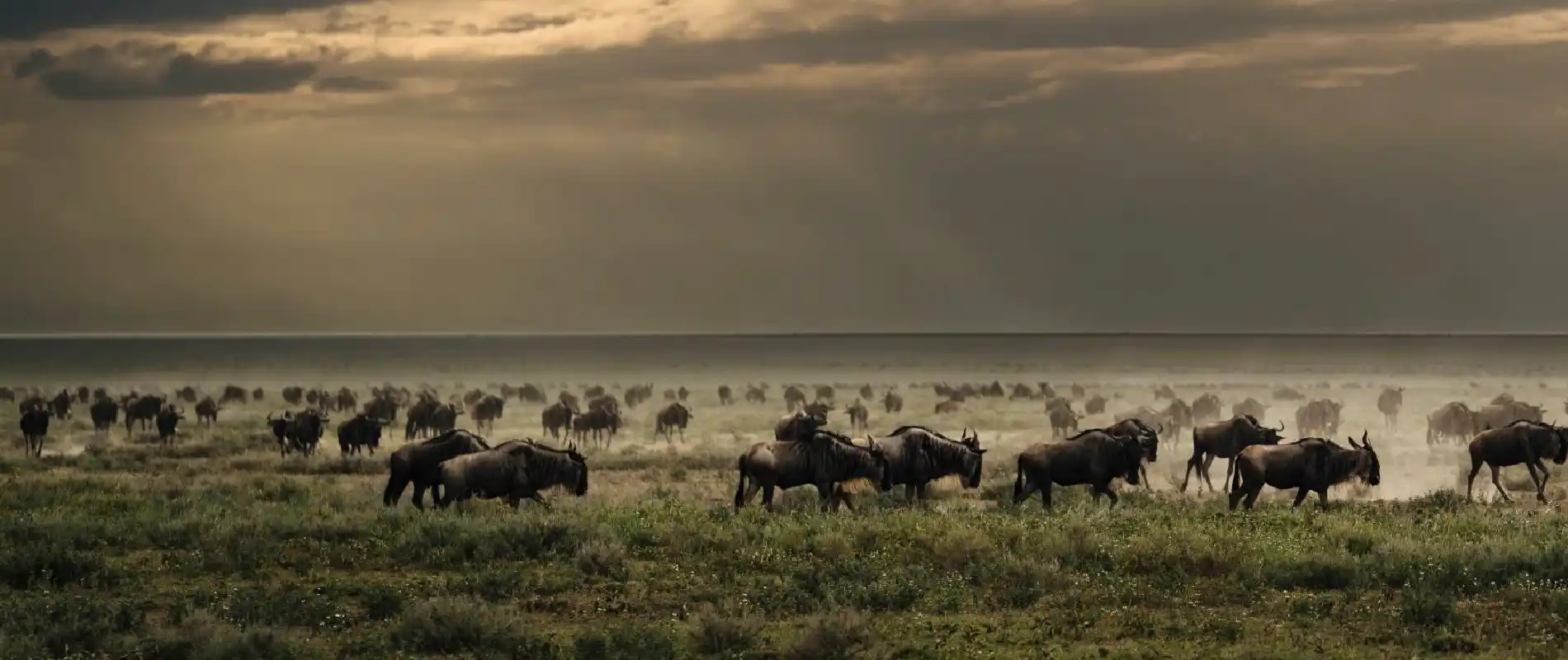
The largest movement of land mammals on Earth. Roughly two million wildebeest, zebra and gazelle circle the Serengeti-Mara ecosystem in an endless search for fresh grass — and we position you exactly where the herds are.
The Great Migration is not a single event but a year-round cycle. From the calving grounds of the southern Serengeti in February, the herds push north-west through the Western Corridor, mass along the Grumeti and Mara rivers between June and October, then spill back south with the short rains in November.
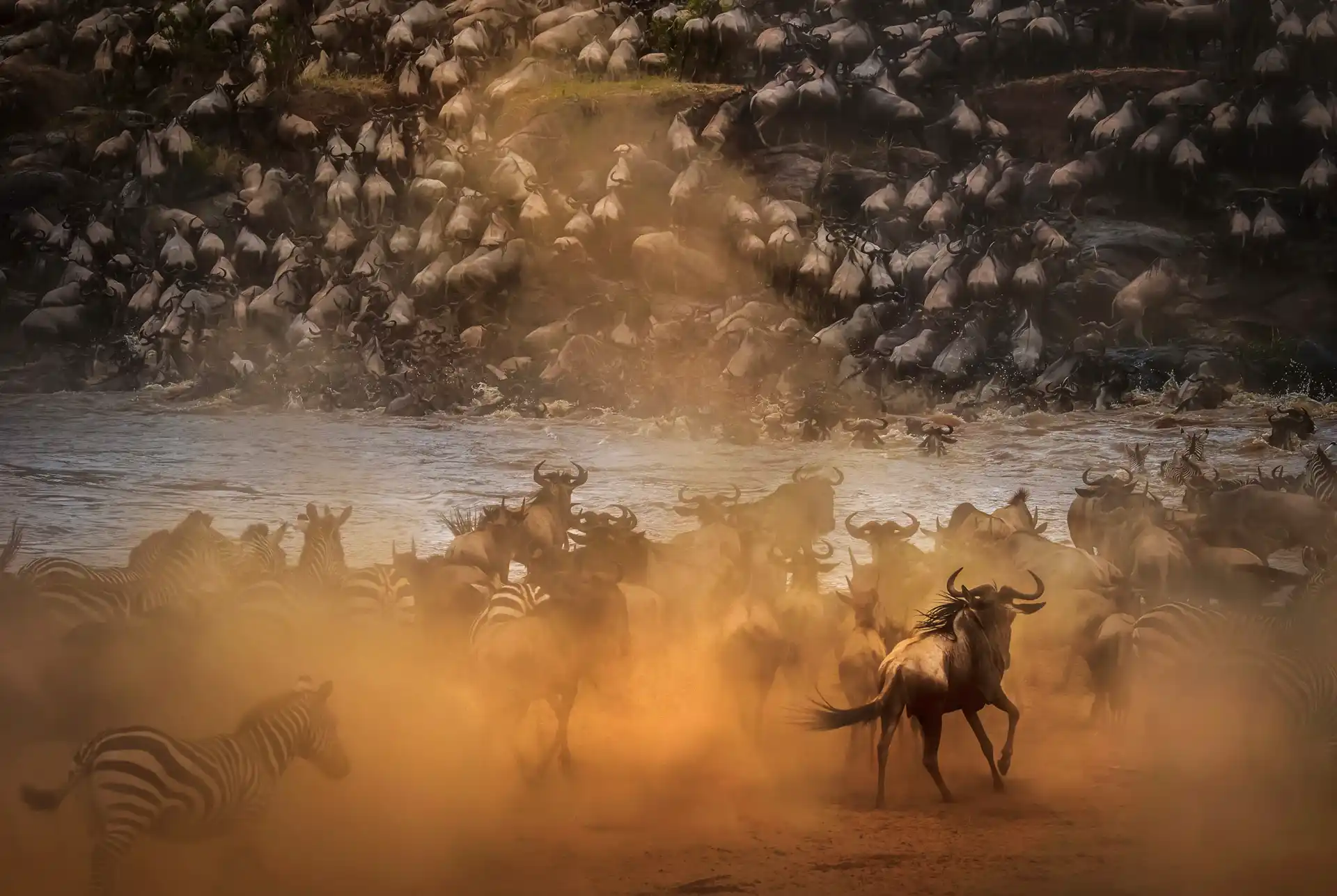
River crossings are the drama everyone dreams of: thousands of wildebeest hesitating on a bank, then plunging into crocodile-filled water in a surge of dust and noise. But the migration is far more than crossings — the calving season's half a million births, the rutting herds of May, and the long columns marching through the central plains are just as moving.
Timing is everything, and this is where a local operator matters. We track the herds weekly through our guide network and build itineraries that put you in the right region at the right time — southern plains in February, western corridor in June, northern Serengeti from July to October — rather than where the brochure happens to have beds.
Share your dates, group size, and wishes — we will reply within 24 hours with a tailor-made itinerary and quote built around this experience.
Questions
Mara River crossings in the northern Serengeti typically happen between July and October, with August and September the most consistent. The Grumeti crossings in the Western Corridor run roughly June to early July. Nature sets the exact dates, so we build flexibility into every migration itinerary.
Safaris